Plumbing emergency? Call (07) 4234 0123, available 24/7.
Plumbing emergency? Call (07) 4234 0123, available 24/7.
Water running where it shouldn’t be, a patch that won’t dry out, or a bill that’s jumped with nothing changed in the house. Give us a call and we’ll get someone out to you the same day where we can.
$0 Call Out Fee (7am – 5pm, Mon – Fri)
Have a plumbing emergency? We’re available 24/7.

We repair burst pipes and water leaks across Cairns and the northern beaches, from a split under a vanity through to a concealed leak under a concrete slab.
When you call us, a plumber answers the phone, works out whether you need to shut the water off before we get there, and arranges a visit. If water is running and you can’t stop it, we treat it as urgent and get to you the same day where possible. If it’s a slow leak that’s been going on for a while, we’ll book you in during business hours, so there’s no after-hours fee on the invoice.
If water is running and you can’t stop it, these are the four things worth doing while you’re waiting on us.
01.
Your water meter is usually near the front boundary, often in a box set into the ground. There’s a tap on the house side of it, and turning it clockwise until it stops shuts the water off to the whole property.
02.
If water is anywhere near a powerpoint, an appliance or the switchboard, don’t go near it. Turn the power off at the board if you can do that safely and dry, and if you can’t, stay out of the room and call an electrician.
03.
With the mains shut, an electric storage system can keep heating after the water in it has gone, which is what damages the element. Turning it off at its isolation switch until the water is back on avoids that.
04.
Photograph the water, the damage and whatever failed, before anything gets moved or cleaned up. If you end up making an insurance claim, that’s the part you can’t go back and get later.
Then give us a call and let us know what’s happened, including whether you managed to get the water off.
Not every leak announces itself. The ones that hide are usually found through what they do to the house or the bill rather than through visible water.
A leak above ground gives you water to look at, so it gets found early. A leak under a slab or in a wall cavity can run for months and never show a drop, which is why the bill or a warm patch on the floor is often the first real sign. The longer one of those runs, the more of the job becomes repairing the damage rather than the pipe, so they’re worth chasing down as soon as you suspect one.
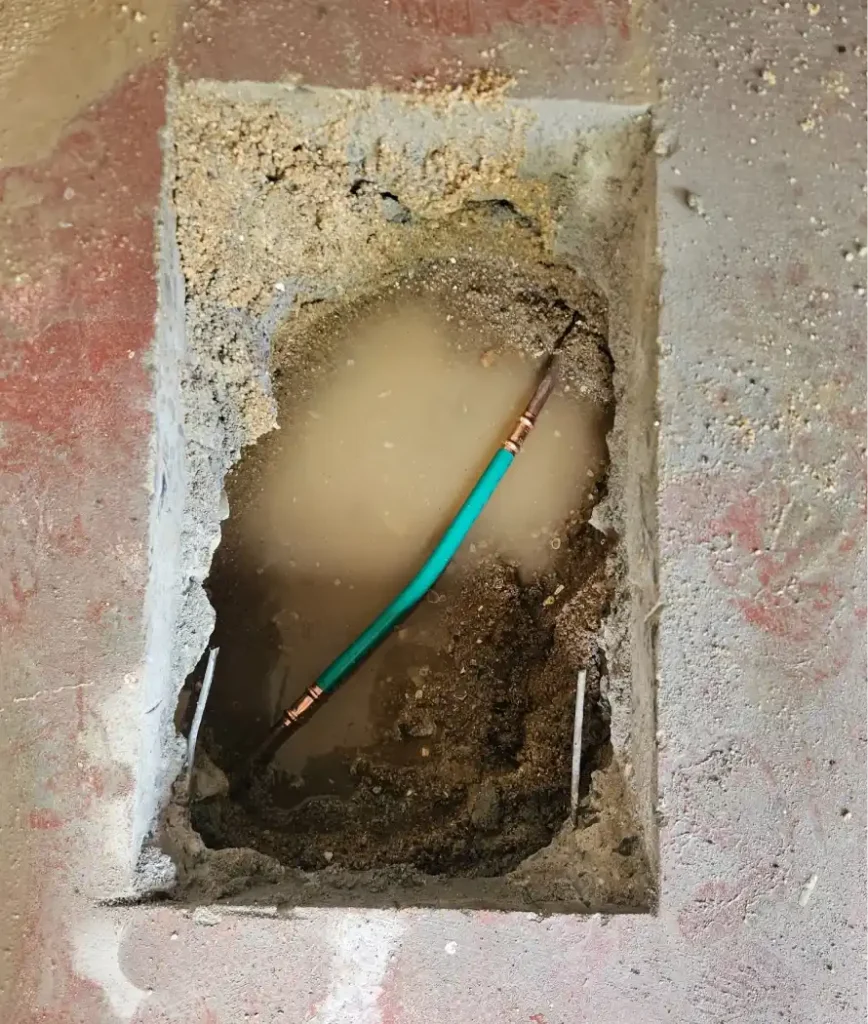
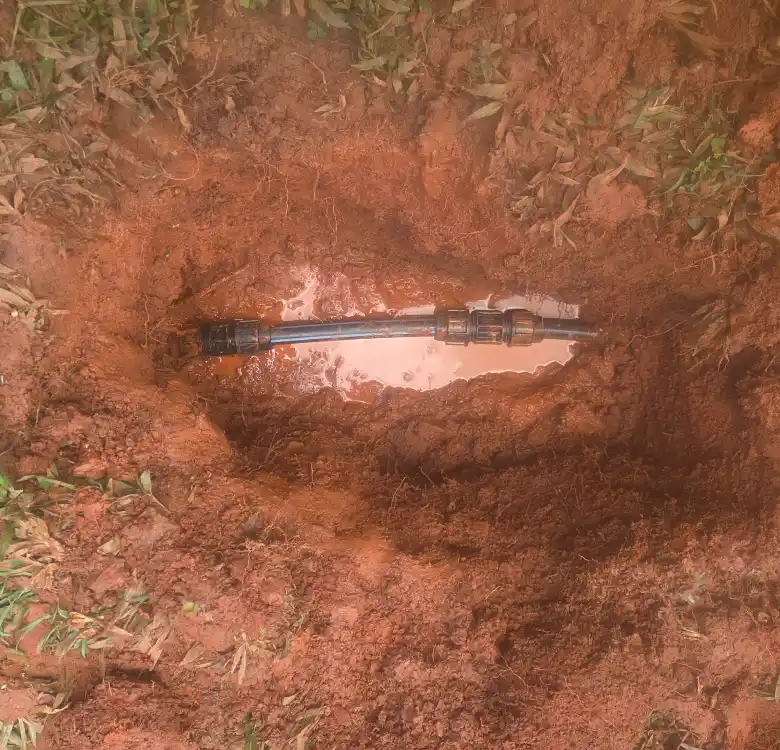
A pipe that’s let go under pressure, whether that’s a copper line that’s corroded through, a poly line that’s gone brittle, or a fitting that’s failed at the joint. We isolate the section, repair or re-run it, and pressure test it before the water goes back on. Where the pipe has failed because of its age and condition rather than a one-off, we’ll tell you what the rest of that run looks like.
The braided hoses that connect your mixer taps, dishwasher and washing machine. When one of these lets go it doesn’t drip, it releases at full mains pressure, and under a vanity behind a closed cupboard door that can run for hours before anyone notices. We replace the hose, check the isolation valve behind it, and look at the others in the house while we’re there.
A tap that won’t stop dripping, a toilet with water tracking through into the pan, or a fitting weeping at the thread. None of them will flood the house, but a continuously running toilet moves more water than most people expect and it shows up on the bill rather than on the floor. These are usually a washer, a seat or a cistern valve, and they’re repaired in one visit.
Leaks in pipework you can’t get to without opening something up, which is the hardest category to find and the one most likely to have been running for a while. The work is narrowing down where the water is coming from before anything gets cut, so the repair stays as small as it can be. We’ll show you what we’ve found and what the repair involves before we start on it.
The line running from the meter to the house, and the pipework feeding taps, tanks and irrigation around the property. Out here a leak shows up as soft ground, a patch that stays green, or pressure that’s dropped at the house with nothing obviously wrong inside. We locate the failed section and repair or re-run it rather than replacing the full length by default.
Water pooling under the unit, weeping from a fitting on top of it, or running continuously from the relief valve. Which one it is matters, because some of these are a valve or a connection and some of them mean the tank itself has gone. We test it and tell you which one you’re dealing with before you spend anything on a hot water system replacement.
Give us a call and talk to a plumber. If it’s urgent we’ll get to you today where we can.
With a concealed leak, most of the work is finding the source. Once the pipe is exposed, the repair itself is usually straightforward. The cost and mess are largely determined by how much needs to be opened up to access the leak.
So we work from the outside in. The meter tells us whether water is moving when it shouldn’t be, and roughly how much. Isolating one section at a time narrows it to a run, and whether the water is on the hot side or the cold side narrows it again. Add what the house is telling you, a warm patch of floor or a damp skirting on one wall, and the search area gets small enough to be worth acting on.
Where that isn’t enough to pinpoint it, we bring in a leak detection specialist who works with acoustic and thermal equipment. Either way, you’ll know where we think the leak is and what reaching it involves before anything gets cut, drilled or dug.
Flexi hoses are the braided steel hoses under your sinks and vanities, and behind the dishwasher and the washing machine. They replaced rigid copper connections because they’re quicker to fit and they let a tap be installed without the pipework lining up perfectly, and nearly every mixer tap in Australia has a pair of them.
What they don’t do is last forever. The braid corrodes from the outside, particularly in a damp cupboard or anywhere with salt in the air, and the rubber inside perishes on its own schedule, and a hose that’s been kinked, over-tightened or bent hard against a cabinet wall during installation can have a reduced service life. Manufacturers generally put the service life at five to ten years, and around one in five household water damage claims in Australia is due to one of these letting go.
The damage comes down to pressure, because a failed hose is an open mains connection rather than a drip, and it’s usually behind a closed cupboard door in a room nobody is standing in. A house with nobody home is the worst version of it.
You can check them yourself by looking for rust or fraying on the braid, any bulge or kink in the hose, and a date or expiry tag on the fitting. If there’s no tag, or the date has been and gone, they’re due.
As a general rule, home and contents policies cover the damage the water does rather than the pipe that failed. So the flooring, the cabinetry and the contents are usually in, and the repair to the pipe itself often isn’t. The other thing that comes up is how long the leak had been running, because a policy that covers a sudden escape of water may not cover one that had been going quietly for months.
Insurers ask for a licensed plumber’s account of what failed, why, and when it was repaired. We record all of that on every leak job as a matter of course, so if your insurer asks for it later, you already have it.
A concealed leak can move a lot of water before anyone knows about it, and that water gets billed. Cairns Regional Council has a concealed water leak policy for exactly this situation, where a residential property has had a sudden and large jump in usage caused by a hidden leak, and eligible owners can apply for financial assistance on the excess.
Applying means being able to show the leak was found and repaired by a licensed plumber, so keep the invoice from the repair. Ours records what we found and what we did about it.
01.
You talk to a plumber, who will ask what the water is doing and work out how urgent the issue is.
02.
We turn up, confirm what the problem is, and give you a quote before we start the work. There’s no call-out fee between 7am and 5pm, Monday to Friday.
03.
We find where the water is coming from and repair it. Most leaks and bursts are sorted on the visit. Where the leak is concealed, or a section has to be re-run, we’ll tell you what’s involved before anything gets opened up.
04.
Before we leave your property, we’ll let you know what failed and why, and whether the rest of the pipework is likely to go the same way.
We only recommend work that genuinely needs doing, and our team follow this standard on every job.
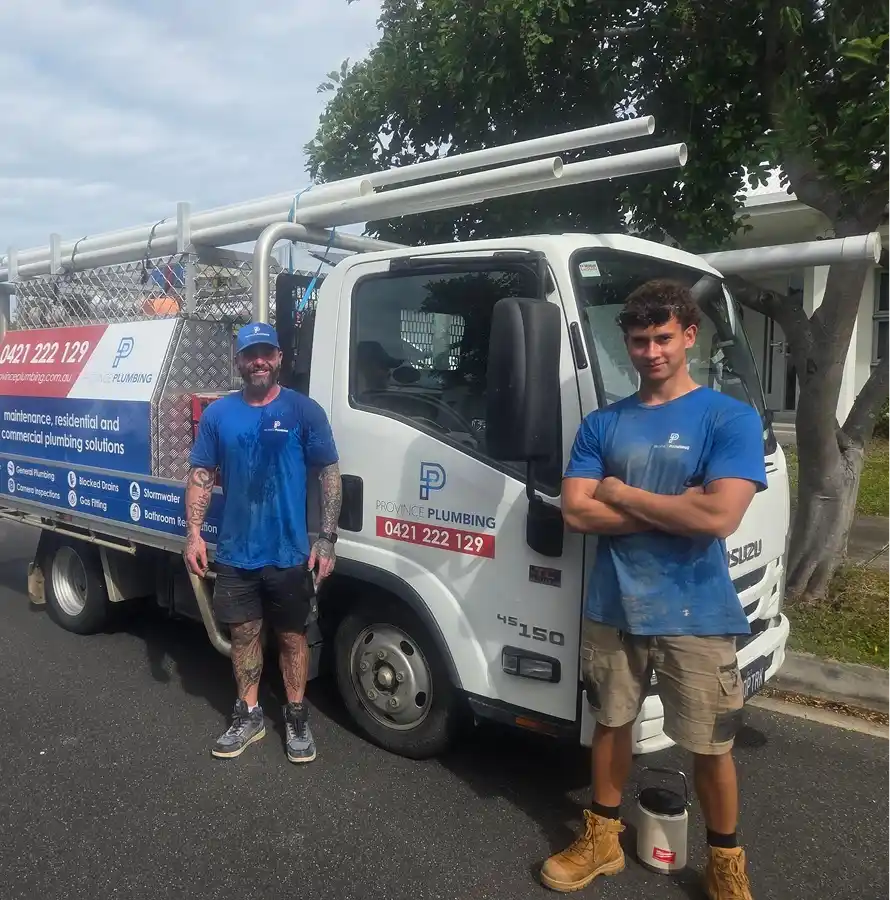
Province Plumbing is based in Cairns and works across the northern beaches. Whoever turns up to your place works to the same standard, and we’re a member of the Master Plumbers’ Association of Queensland, which sets the code of conduct we are held to.
When you ring about water you can’t stop, someone picks up. If we’re on another job you’ll get a call back on when we can be there, so you know how long you’re without water.
Tell us what the water is doing and we’ll tell you what it needs. Same day where we can.
Your meter will tell you. Turn off every tap in the house and anything that fills on its own, including the irrigation, then go and watch the meter for a few minutes. Most meters have a small dial or a star wheel that turns with even a trickle of flow, and if that’s moving with everything off, water is going somewhere it shouldn’t. Take a photo of the reading, leave it an hour without using any water, and photograph it again, and the difference tells you roughly how much you’re losing.
Age and corrosion account for most of them. Older galvanised and copper lines thin from the inside over decades until a weak point gives out, and poly pipe run in the open goes brittle in the sun. Beyond that it’s ground movement putting strain on a joint, tree roots pressing against a line, a fitting that was never quite right, and water hammer, which is the bang you hear when a tap or a valve shuts hard and sends a pressure spike back down the pipe. A pipe that’s failed from age tells you something about the rest of that run, which is why we look at what caused it rather than just repairing the leak.
Most policies deal with the water damage rather than the plumbing, so the flooring and the contents are generally covered and the pipe repair generally isn’t. Two things tend to decide a claim: whether the escape of water was sudden, and whether the failure came from something that had been left. Photograph everything before you clean up, because a photo taken while the water is still there carries more weight with a claim than anything put together afterwards. Check your own policy wording too, since cover varies more between insurers on water damage than on almost anything else.
Usually they want to know what failed, why it failed and when it was repaired, from the licensed plumber who did the work, and our invoice covers most of that on its own. If your insurer comes back wanting more, tell us what they’ve asked for and we’ll send you through any additional information we have available, including photos from the job.
Sometimes, and it depends where the pipe runs. Where the leak is close to an edge or a section can be re-routed around the slab instead of under it, the floor stays intact. Where it’s out in the middle of a slab with no way around, reaching it means cutting a section of concrete, and the work goes into making that cut as small and as well-placed as possible. You’ll see where we think the leak is and what the two options look like before anyone starts on the floor.
Manufacturers generally give them five to ten years, though the condition they’re in tells you more than their age does. A hose in a dry cupboard that was fitted without being kinked can outlast one that’s been bent hard against a cabinet wall since day one. Insurers will sometimes ask about the age and condition of the hoses when a water damage claim comes back to one, so a set with a readable date tag and no rust on the braid puts you in a stronger position than a set nobody can date.
As a general rule, yes. The water authority looks after the main and the meter, and everything from the meter into your property is the owner’s, including the service line running across the yard. That’s why a leak on that section shows up on your bill as well as in the ground. If we get there and the leak turns out to be on the authority’s side, we’ll tell you, so you’re not paying to fix something that isn’t yours.
It happens, usually because the tap has seized or the box has filled with dirt and grass. Try both hands and steady pressure rather than force, since a tap that snaps leaves you worse off. If it won’t move, ring us and say so on the call, because it changes what we bring and how fast we need to be there. In the meantime, shutting off the isolation valve under the fixture that’s leaking will sometimes get you out of trouble on its own.
Gas fitting, bathroom plumbing, commercial work and the smaller jobs around the house.
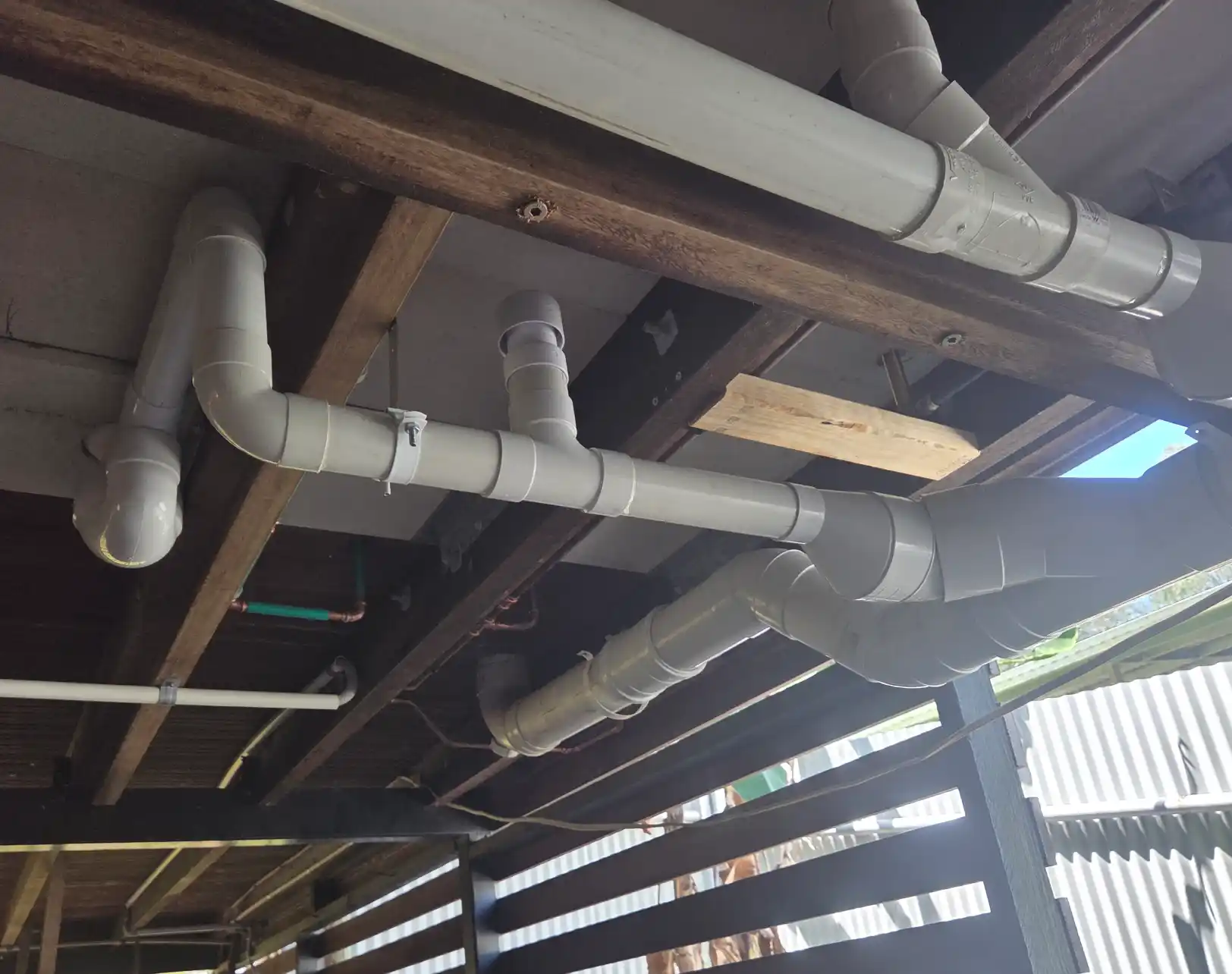
Blocked toilets, sinks, sewer lines and stormwater. We clear it and tell you has caused the blockage.
Electric, gas and solar, repaired and replaced. We test the system first and tell you whether it actually needs replacing.