Plumbing emergency? Call (07) 4234 0123, available 24/7.
Plumbing emergency? Call (07) 4234 0123, available 24/7.
A cooktop that won’t light, a gas smell you can’t place, or a new appliance that needs connecting properly. Give us a call and we’ll get someone out to you the same day where we can.
$0 Call Out Fee (7am – 5pm, Mon – Fri)
Have a plumbing emergency? We’re available 24/7.
We do gas fitting for homes and businesses across Cairns and the northern beaches, from cooktops and hot water systems through to leak testing and new gas lines. Gas is licensed work, and we’ve got licensed gas fitters on the team, so it stays in-house rather than getting handed to someone else.
When you call us, a plumber answers the phone, asks what your gas or your appliance is doing, and arranges a visit to test it on site. If you can smell gas we treat it as urgent and get to you the same day where possible. Every gas job finishes with the compliance certificate that covers the work.
Gas problems usually show themselves in small ways before they turn into something bigger. These are the ones worth acting on.
A yellow flame and soot marks both point to an appliance that isn’t burning gas cleanly, and that’s worth sorting whether or not the appliance still works. If you can smell gas, turn the cylinder off at the valve, open the room up, and leave the switches and the appliances alone until it clears. Then give us a call.
Connecting a new cooktop or oven, replacing one that’s had its day, and repairing appliances that have stopped burning properly. A new appliance needs the right connection, an isolation valve you can actually get to, and enough gas reaching it once everything else in the house is running. It gets tested and certified before we leave.
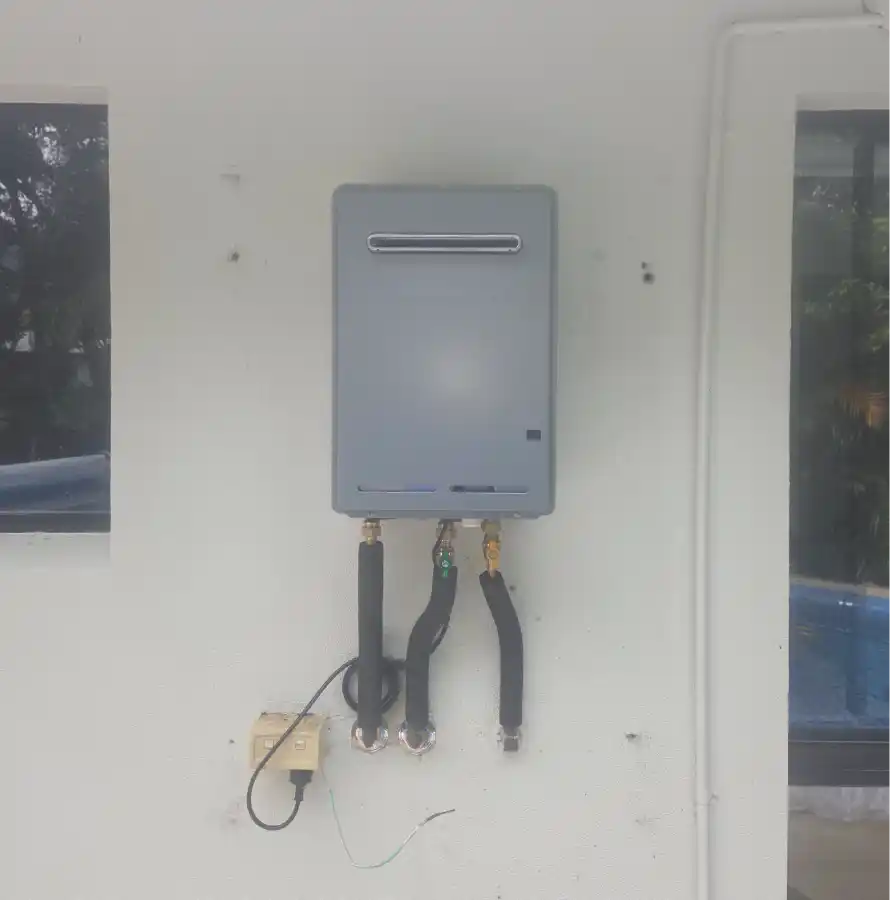
Gas storage and continuous flow units, for either replacement or replacement. A gas hot water system is plumbing work and gas work at the same time, and having both licences on the one team means one visit rather than two trades booked around each other.
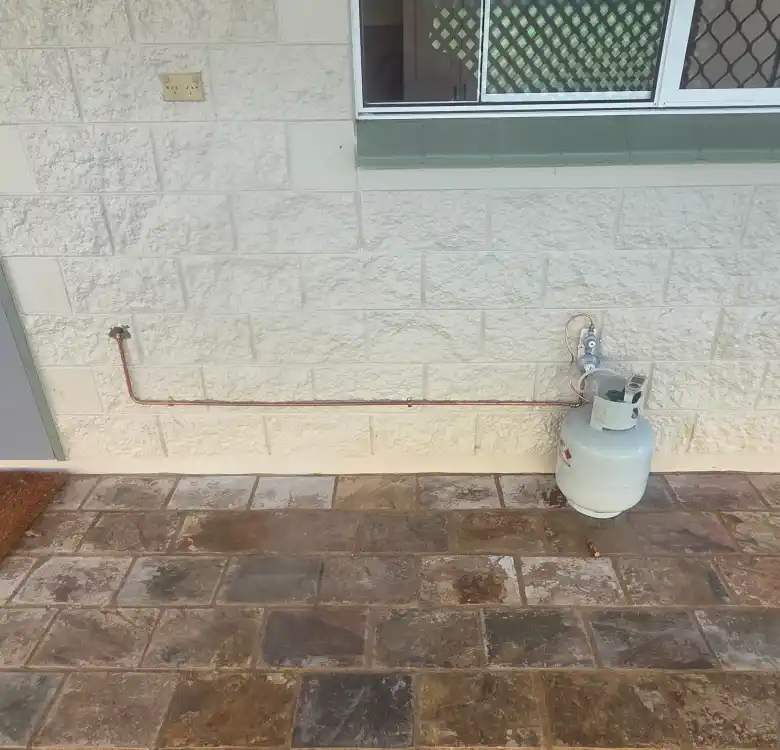
Running a fixed gas point out to a barbecue, an outdoor kitchen or a patio setup, so you’re on the same cylinders as the rest of the house instead of swapping a small bottle over. We size the line for what you’re connecting and can put a bayonet fitting on it, so the barbecue still comes away when you want to move it.
Setting up a new cylinder location, moving an existing one, and replacing regulators and automatic changeover valves. LPG is heavier than air, so it settles low rather than lifting away, which is why there are clearances a cylinder location has to keep to. Getting the position right the first time is a lot easier than shifting it later.
Pressure testing the installation to find where it’s losing gas, then repairing the section causing it. It’s also the test worth running when you’ve just bought a place and want to know what you’ve inherited, or when an older setup is about to get used harder than it has been.
Running gas to an appliance that’s never had it, extending an existing run, and moving a connection when a kitchen or a laundry gets reworked. Pipe sizing is what decides whether every appliance still gets what it needs when they’re all going at once, and it’s the part that gets missed when a line is simply extended to reach.
Gas work for cafes, kitchens and hospitality, including appliance connections, leak testing and compliance checks on an installation you’ve taken over. Commercial gas has more appliances drawing at once and more paperwork involved, and both are accounted for in the quote.
Give us a call and tell us what your gas or your appliance is doing. If it’s urgent we’ll get to you same day where we can.
Cairns isn’t on a reticulated natural gas network, so nearly every gas appliance in town runs on LPG out of cylinders. That makes a few things worth understanding about your own setup.
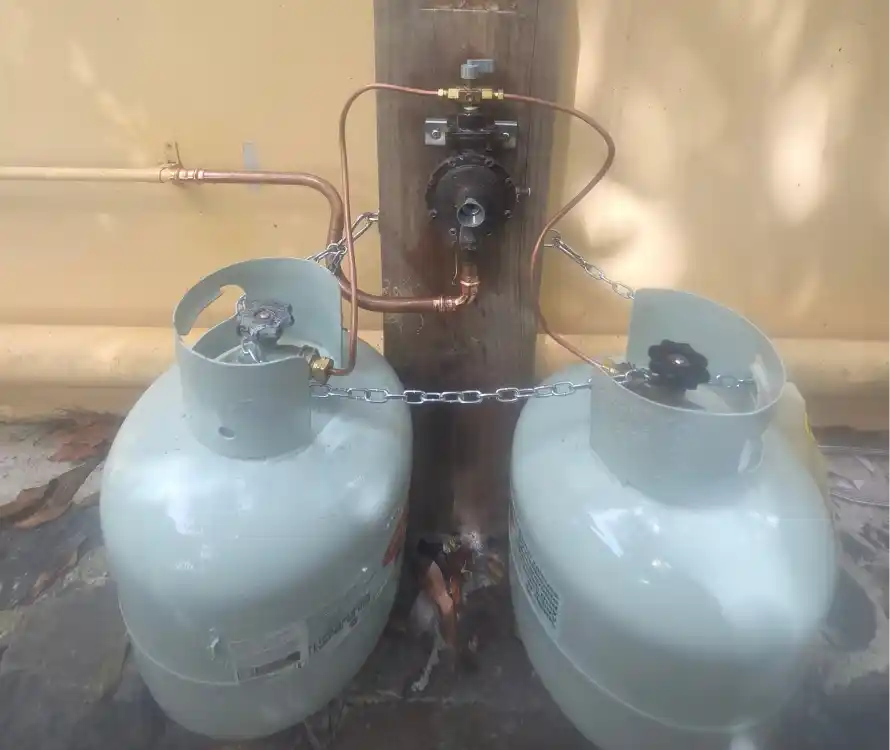
The standard domestic setup is a pair of 45kg cylinders joined by an automatic changeover valve. One cylinder feeds the house while the other sits full, and when the first one empties the valve switches across on its own so the gas doesn’t stop while you wait on a delivery. The indicator on the valve shows which side is live, and it’s worth a glance every so often, because once both sides are empty the changeover has nothing left to switch to.
The regulator sits between the cylinders and the house and drops the pressure down to what appliances are built to run on. It’s a wearing part with a service life of its own, and one that’s drifting tends to show up as appliances not performing the way they used to, rather than as anything obviously broken.
Cylinder size and line size both depend on what’s connected and how much of it runs at the same time. A cooktop on its own is a different job to a cooktop, a continuous flow hot water system and a barbecue all drawing at once. Where a system was sized for one appliance and has had two more added since, that’s often the cause of gas that seems to run out of puff.
There are clearances a cylinder location has to keep from windows, drains, ignition sources and the boundary, and they exist because LPG settles low if it escapes instead of lifting away. It’s the part of a gas installation most likely to have been done by eye on an older property.
Every piece of gas work done in Queensland requires a compliance certificate, and the property owner gets the original. It records what was done, what was connected, the test results and the licence information of the gas fitter who did the work. Since the middle of 2026 they’re issued electronically through the state’s gas safety portal, so yours arrives as a document you can file rather than a page you have to keep track of.
It’s worth holding onto for three reasons. Insurers ask for it when a claim involves a gas appliance. Manufacturers ask for it when you make a warranty claim on a new unit. And it answers the question when you sell the house and a buyer wants to know who connected the cooktop.
You’ll get yours from us on every gas job, including the small ones.
01.
You talk to a plumber, who will ask what your gas or your appliance is doing and work out how urgent the issue is.
02.
We turn up, confirm what the problem is, and give you a quote before we start the work. There’s no call-out fee between 7am and 5pm, Monday to Friday.
03.
We test the installation, find what’s causing the problem, and do the work. Most repairs and appliance connections are done on the visit. Where an appliance or a part has to be ordered in, we’ll tell you what’s involved and book a return visit.
04.
Before we leave your property, we’ll let you know what caused the fault, and you’ll have the compliance certificate for the work we’ve done.
We only recommend work that genuinely needs doing, and our team follow this standard on every job.
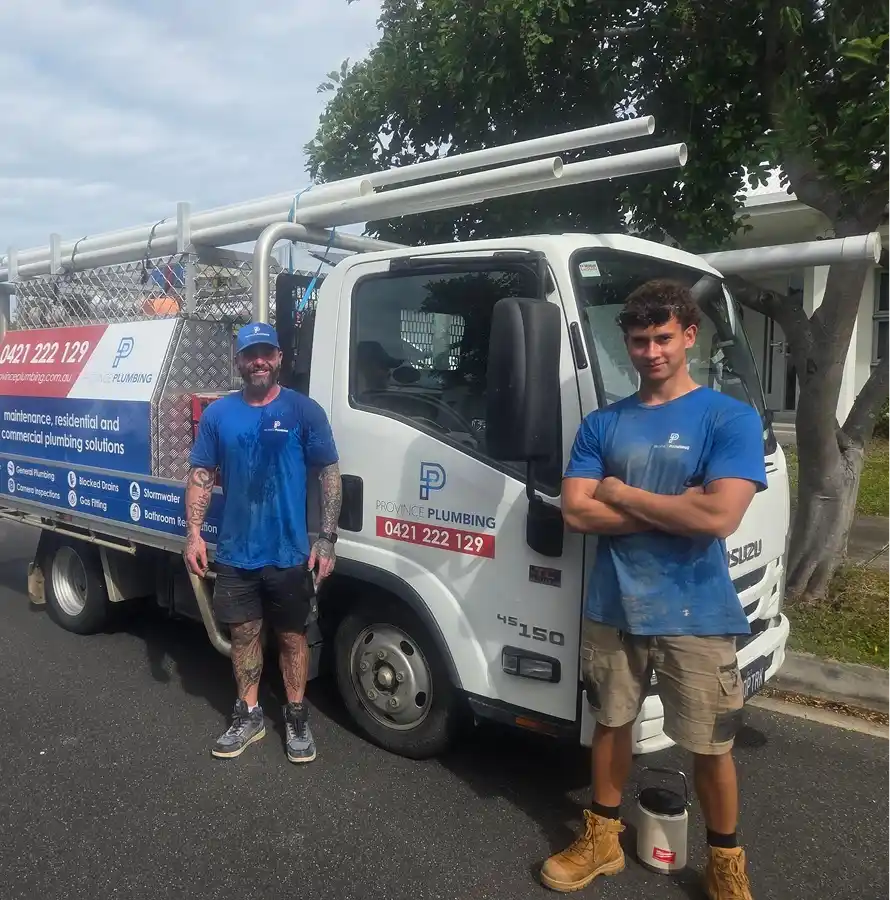
Province Plumbing is based in Cairns and works across the northern beaches. Whoever turns up to your place works to the same standard, and we’re a member of the Master Plumbers’ Association of Queensland, which sets the code of conduct we are held to.
Between the team there’s more than 35 years in the trade across domestic, commercial and industrial work, and we hold gas licences. That’s why a gas job stays with us from the first call through to the certificate.
Tell us what your gas or your appliance is doing and we’ll tell you what it needs. Same day where we can.
Any work on a gas appliance or a gas line has to be done by someone holding a current gas work licence, and connecting a cooktop you’ve bought yourself counts. That’s why retailers will deliver an appliance and leave it sitting in the kitchen rather than connecting it. Once it’s there, we can make the connection, test it and certify it.
The smell is usually the first sign, because LPG has a scent added to it so that leaks get noticed. Beyond that it’s a hissing near the cylinders or a connection, or cylinders emptying faster than the household would explain. If you can smell gas, turn the cylinder off at the valve, open the space up, and avoid using power switches and the appliances until it clears. Then ring us and we’ll pressure test the installation to find where it’s coming from.
Gas is one of the few jobs around a house where the answer is a hard no rather than a recommendation. Unlicensed gas work is an offence in Queensland, it voids the warranty on the appliance, and it’s the first thing an insurer will look at if anything goes wrong later. You’re welcome to buy the appliance and have it delivered, and we’ll handle the connection, the test and the certificate.
A leak test and inspection of the whole installation is a common job when you’ve just bought a place, when an appliance has been playing up, or when an older setup is about to get used harder than it has been. We pressure test the line and go over the cylinders, the regulator, the connections and the ventilation. You’ll get a plain answer on what’s sound, what needs attention, and what can be left alone.
Running a fixed line out to the barbecue puts it on the same cylinders as the rest of the house, so there’s no small bottle to refill. The line gets sized for the barbecue you’re connecting, and a bayonet fitting on the end means it can still be unplugged and moved when you want the space back.
A few different things cause this. Both cylinders left open at once, so they empty together and there’s no reserve sitting behind them. More appliances connected than the setup was originally sized to carry. A leak somewhere on the line. Or a changeover that was never switched back after the last delivery, so the house has been running on one side the whole time. A leak test and inspection of changeover sorts out which one you’ve got.
Some can and some can’t, and it comes down to the model. Where a conversion is possible the manufacturer makes a kit for it, which changes the injectors so the appliance burns the right gas at the right rate, and the kit has to be fitted by a licensed gas fitter and the appliance tested afterwards. This job is often required when appliances are brought up from a city where the house was on mains gas. Tell us the make and model and we’ll find out whether there’s a kit for it before you spend anything.
Three things affect the price: whether there’s already a gas point behind the appliance, how far the line has to travel, and whether the cylinders and the existing pipework can carry another appliance. That’s why we quote on site rather than over the phone. Quotes are free between 7am and 5pm Monday to Friday with no call-out fee, so you’ll know what the job involves before you commit to it.
Burst pipes, bathroom plumbing, commercial work and the smaller jobs around the house.
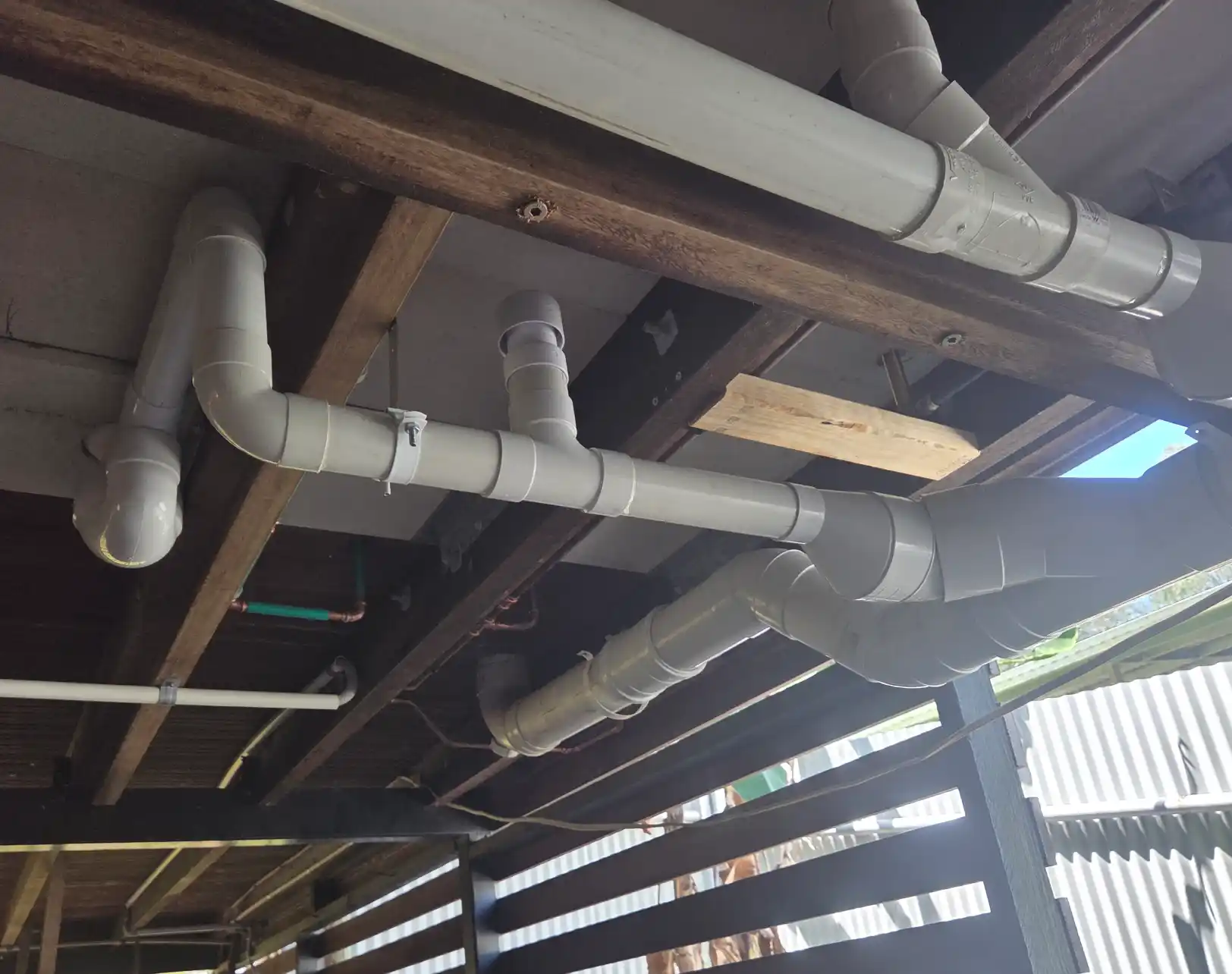
Blocked toilets, sinks, sewer lines and stormwater. We clear it and tell you what caused the blockage.
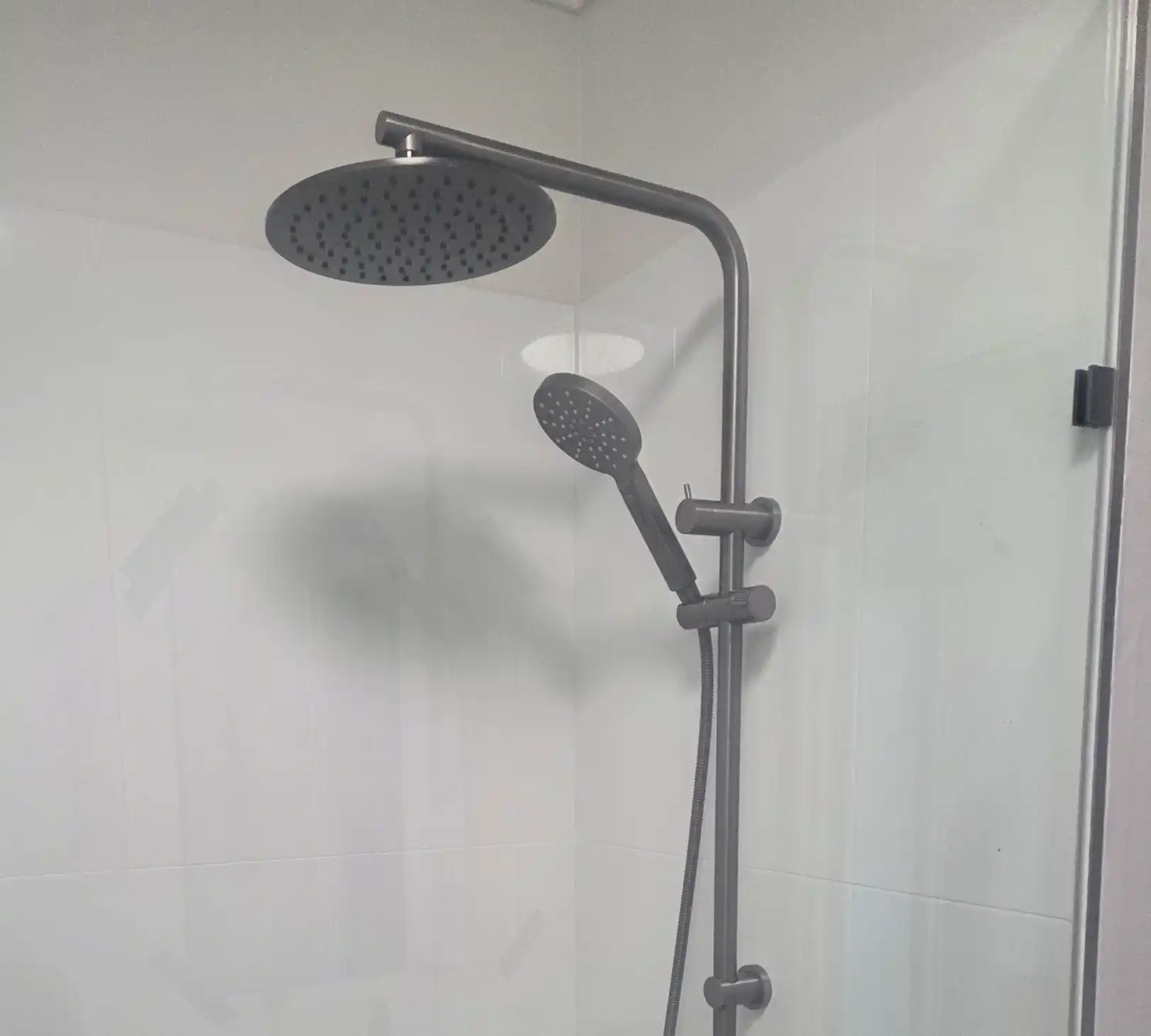
Electric, gas and solar, repaired and replaced. We test the system first and tell you whether it actually needs replacing.