Plumbing emergency? Call (07) 4234 0123, available 24/7.
Plumbing emergency? Call (07) 4234 0123, available 24/7.
No hot water when you turned the tap on this morning? Got a unit that’s started leaking, or hot water that runs out before everyone’s had a shower? Give us a call and we’ll get someone out to you the same day where we can.
$0 Call Out Fee (7am – 5pm, Mon – Fri)
Have a plumbing emergency? We’re available 24/7.
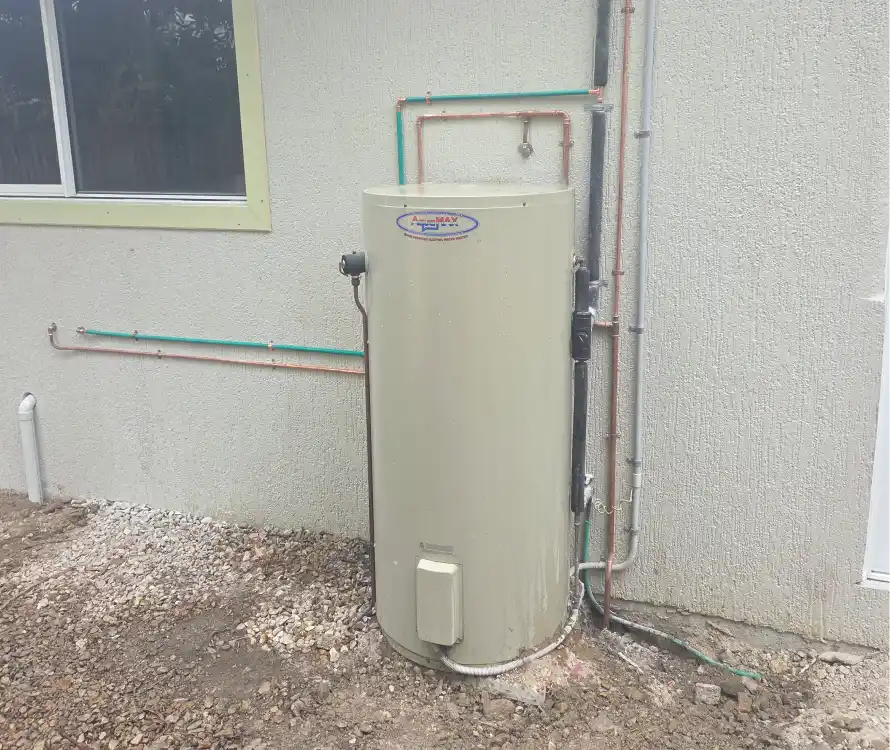
We repair and replace hot water systems across Cairns and the northern beaches, electric, gas and solar, from a unit that’s stopped heating to one that’s finally reached the end of its life.
When you call us, a plumber answers the phone, asks what your system is doing, and arranges a visit to test it on site. If you’ve got no hot water at all we treat it as urgent and get to you the same day where possible. Where the fault is something we can repair, we’ll repair it, and we’ll only recommend a replacement when there’s real evidence the system has failed.
Most hot water systems give you some warning before they stop working altogether. These are the ones worth acting on.
Discoloured water and a tank that’s started rumbling usually point to the inside of the cylinder rather than anything electrical, and that’s the point where a repair stops being worth doing. Water appearing underneath the unit is the one to act on quickest. A leaking cylinder won’t recover, and the longer it runs the more damage it does to whatever it’s sitting on or near.
Every new system we supply is manufactured within 6 months of the day it goes in. A warranty term runs against the unit rather than the date it was bought, so a recent build gives you the full period the manufacturer offers.
When an electric unit stops heating, the fault is usually the element or the thermostat rather than the cylinder itself, and both are parts we replace on site. We test the system before we quote, so you’re not paying for a new unit when a component would have done the job. Where the cylinder has gone, we’ll show you what we’ve found and talk through what replacing it involves.
A gas storage unit that won’t light is often caused by the pilot, the thermocouple or the gas control valve. All three are repairable, and all three are gas work, so it’s done by one of our licensed gas fitters rather than handed to someone else. If the unit itself is past repair we can replace it and reconnect the gas properly at the same time.
Continuous flow units heat water on demand instead of storing it, so the faults look different. Water that runs hot then cold, a unit that won’t fire on a low flow, or an error code showing on the front panel are the common ones, and most are caused by the ignition, the flow sensor or the heat exchanger. We diagnose it on site and repair it where the unit still has life in it.
Solar systems have more parts to go wrong, and the fault isn’t always up on the roof. No hot water on a sunny day is more often the booster, the circulating pump or the controller than the collectors themselves. We repair all of it, and when a system has reached the end of its life we’ll replace it like for like or talk you through the other options.
We repair and install all the major hot water brands, so whatever’s already at your place, it’s a system we work on. If you’re not sure what you’ve got, the badge on the front of the unit is usually enough for us to go on when you call.





Give us a call and tell us what your system’s doing. If it’s urgent we’ll get to you today where we can.
Three things decide whether a hot water system is worth repairing: what’s failed, how old it is, and whether you’re likely to experience more issues.
Elements, thermostats, valves, pilots and thermocouples are all wearing parts, and replacing one on a system that’s otherwise sound is normal maintenance. A leaking cylinder is a different thing.
Once the tank itself has corroded through there’s no repair for it, and that’s the point where replacing it stops being a decision.
Eight to twelve years is a normal life for a storage unit, and continuous flow and solar systems often go longer.
Water quality, how hard the system has worked and whether the anode has ever been replaced all move that number around. A system inside that range with one failed part is usually still worth repairing.
A unit that’s had two or three repairs in as many years is telling you something the individual faults aren’t. Once the parts start going one after another it generally means the system is wearing out as a whole rather than having bad luck. Where it’s genuinely close, we’ll talk through what the repair buys you against a replacement, and leave the decision with you.
We’ve told people their hot water system was fine when they’d called expecting to hear it needed replacing. Age on its own isn’t a reason to replace a unit that’s still heating properly. If yours is working, we’ll tell you that.
A hot water system isn’t just plumbed in and switched on. Several things have to be right for the installation to comply, and for the manufacturer’s warranty on the unit to stay valid.
Hot water delivered to bathrooms and ensuites has to come out at no more than 50 degrees. A tempering valve is what controls it, and it’s fitted or replaced as part of any new installation, including on systems that never had one.
The relief valve lets pressure out of the cylinder before it becomes a problem. It has a service life of its own, so it’s worth testing and reviewing between installations.
Where a unit sits inside the house or above a living space, it needs a tray underneath it and a drain that takes water somewhere safe if the cylinder develops a leak.
Gas units need a licensed gas fitter, and we’ve got them on the team, so this work is done in-house. Electric units need a licensed electrician for the electrical connection, which we’ll organise as part of the job.
This includes all the compliance paperwork for the plumbing and gas work, along with the installation details the manufacturer may require if you ever need to make a warranty claim.
All completed properly at the time of installation, it’s simply part of the job.
01.
You talk to a plumber, who will ask what your hot water system is doing and work out how urgent the issue is.
02.
We turn up, confirm what the problem is, and give you a quote before we start the work. There’s no call-out fee between 7am and 5pm, Monday to Friday.
03.
We test the system and tell you whether it needs a repair or a replacement. Most repairs are done on the visit. Depending on the brand and model you want, a new unit can sometimes go in the same day, or we’ll order it in and book in a follow up visit to complete the work.
04.
Before we leave your property, we’ll let you know what caused the fault and what to expect from the system from here.
We only recommend work that genuinely needs doing, and our team follow this standard on every job.
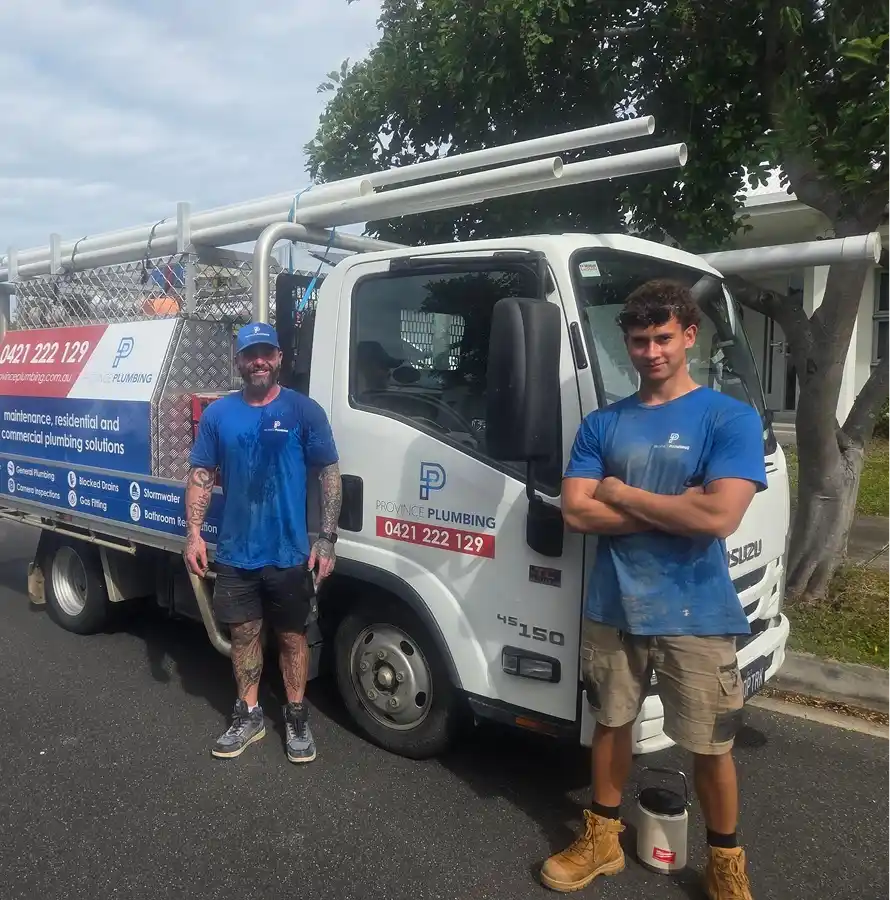
Province Plumbing is based in Cairns and works across the northern beaches. Whoever turns up to your place works to the same standard, and we’re a member of the Master Plumbers’ Association of Queensland, which sets the code of conduct we adhere to.
Between the team there’s more than 35 years in the trade, across domestic, commercial and industrial plumbing, and two of us are licensed gas fitters.
Tell us what your system’s doing and we’ll tell you what it needs. Same day where we can.
Eight to twelve years is a normal life for an electric or gas storage unit, and continuous flow and solar systems often go longer. Water quality, how hard the system works, and whether the sacrificial anode inside the tank has ever been replaced all have an effect on service life. Replacing the anode part way through is the one piece of maintenance that genuinely extends the life of a storage system, and almost nobody does it. If yours is inside that range and still heating properly, there’s no reason to touch it.
On an electric system it’s often a failed element or a tripped safety cut-out, and both are a repair rather than a replacement. On gas it’s more likely the pilot going out or the ignition failing. If the water is warm rather than cold, or runs hot for a minute and then cools off, that points somewhere different again, which is why we test rather than guess. Tell us which of those it’s doing when you call and we’ll have a fair idea before we arrive.
It comes down to what’s failed. Replacing an element, a thermostat or a valve on a system that’s otherwise sound is normal maintenance and it’s the obvious call. A corroded cylinder is the other end of it, because there’s no repair for a tank that’s leaking. Where it’s genuinely close, we’ll talk through what the repair buys you and leave the decision with you. Quotes are free between 7am and 5pm Monday to Friday with no call-out fee, so you can find out where you stand before committing to anything.
Water underneath the unit usually means one of two things. Either the pressure and temperature relief valve is discharging, which it’s designed to do and which often just needs the valve replaced, or the cylinder itself has corroded through. The first is a repair. The second isn’t, and it tends to get worse quickly once it starts. Either way, turn the water off to the unit at the isolation valve if you can get to it, and give us a call.
A straight swap for the same type and size of unit is generally done within the visit. It takes longer where the new system is a different type to the old one, or where the unit has to move, because that brings new pipework and sometimes gas or electrical work with it. What decides the timing more often is the unit itself. Depending on the brand and model you’re after, we can sometimes fit it the same day, or we’ll order it in and book a follow up visit to complete the work.
That depends on the brand, the model and how long ago it went in. Manufacturer warranties vary a lot between brands, and the cylinder is usually covered for longer than the parts inside it. On site we can tell you what you’ve got and roughly where it sits in its warranty period, and where the fault looks like something the manufacturer should cover, we’ll give you the details you need to make the claim. Our own work is covered by our workmanship guarantee.
Yes, as long as there’s gas at the property or a connection can be run to it. It’s a bigger job than a like for like replacement, because the new unit needs a gas line, a flue where the model calls for one, and the old electrical supply made safe. We have licensed gas fitters on the team, so the gas side is handled in-house rather than subcontracted out. Where the existing unit sits often decides how involved the change is, so it’s worth having us look at it on site.
No. Hot water installation is licensed plumbing work in Queensland, and gas units need a licensed gas fitter on top of that. Beyond the licensing, a new installation has to meet current requirements even where the old one didn’t, which usually means a tempering valve, a compliant relief valve and drainage, and certification at the end. Doing it yourself also puts the manufacturer’s warranty on the unit at risk.
Blocked drains, bathroom plumbing, commercial work and the smaller jobs around the house.
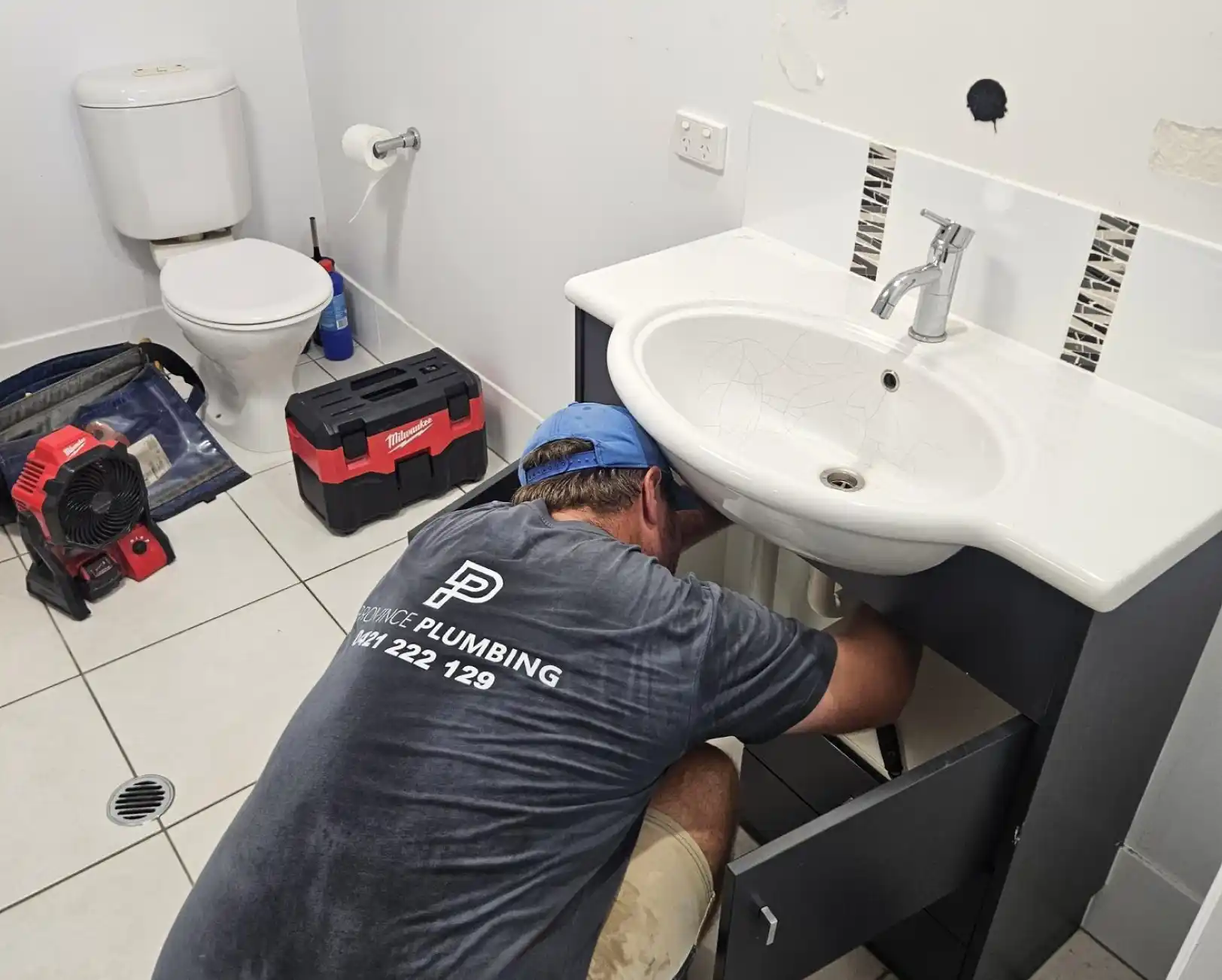
Burst pipes, failed flexi hoses, and leaks hiding under slabs and driveways. We find where the water is coming from and stop it.
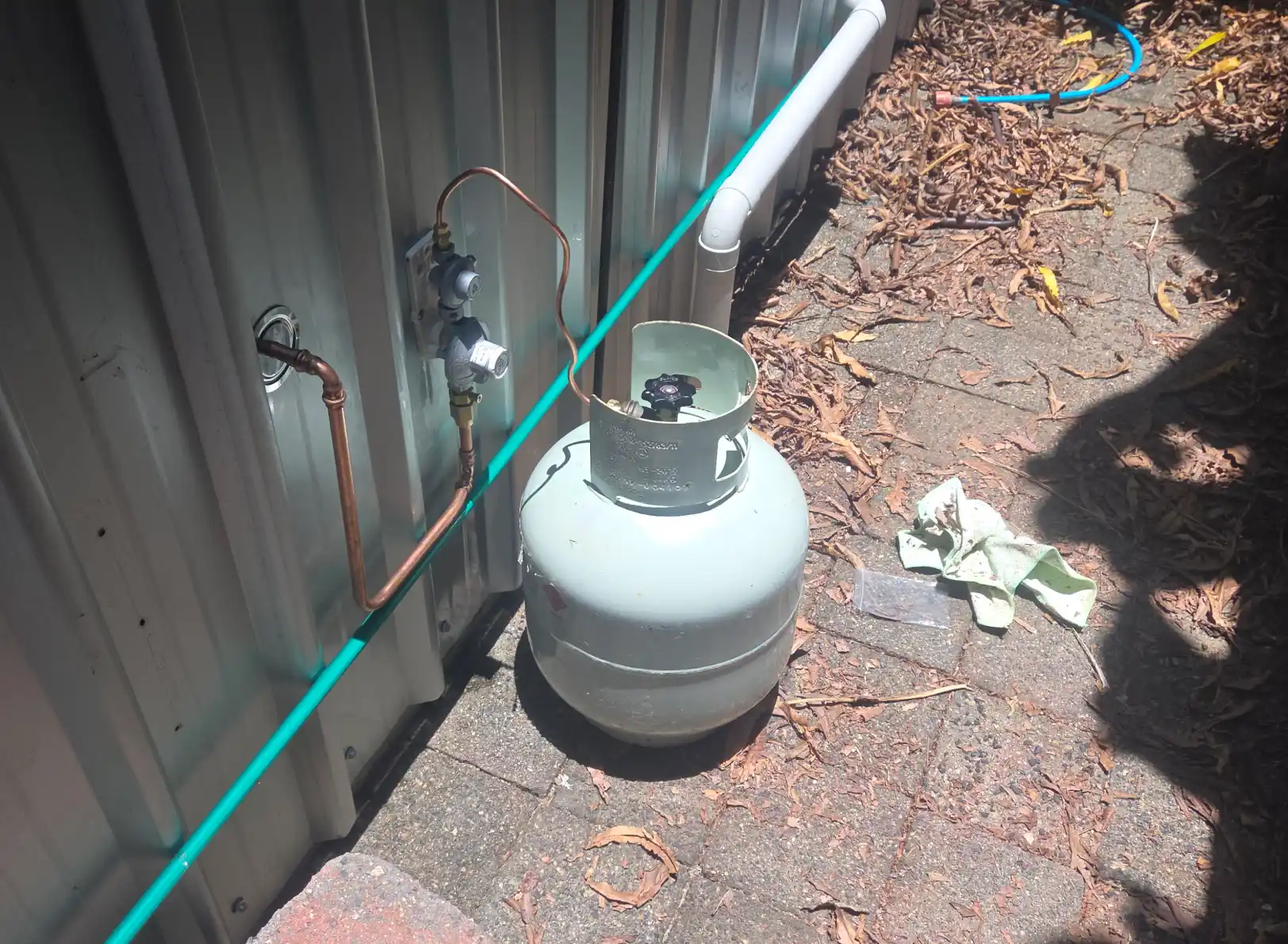
Cooktops, gas hot water and BBQ points connected and certified by one of our licensed gas fitters.